
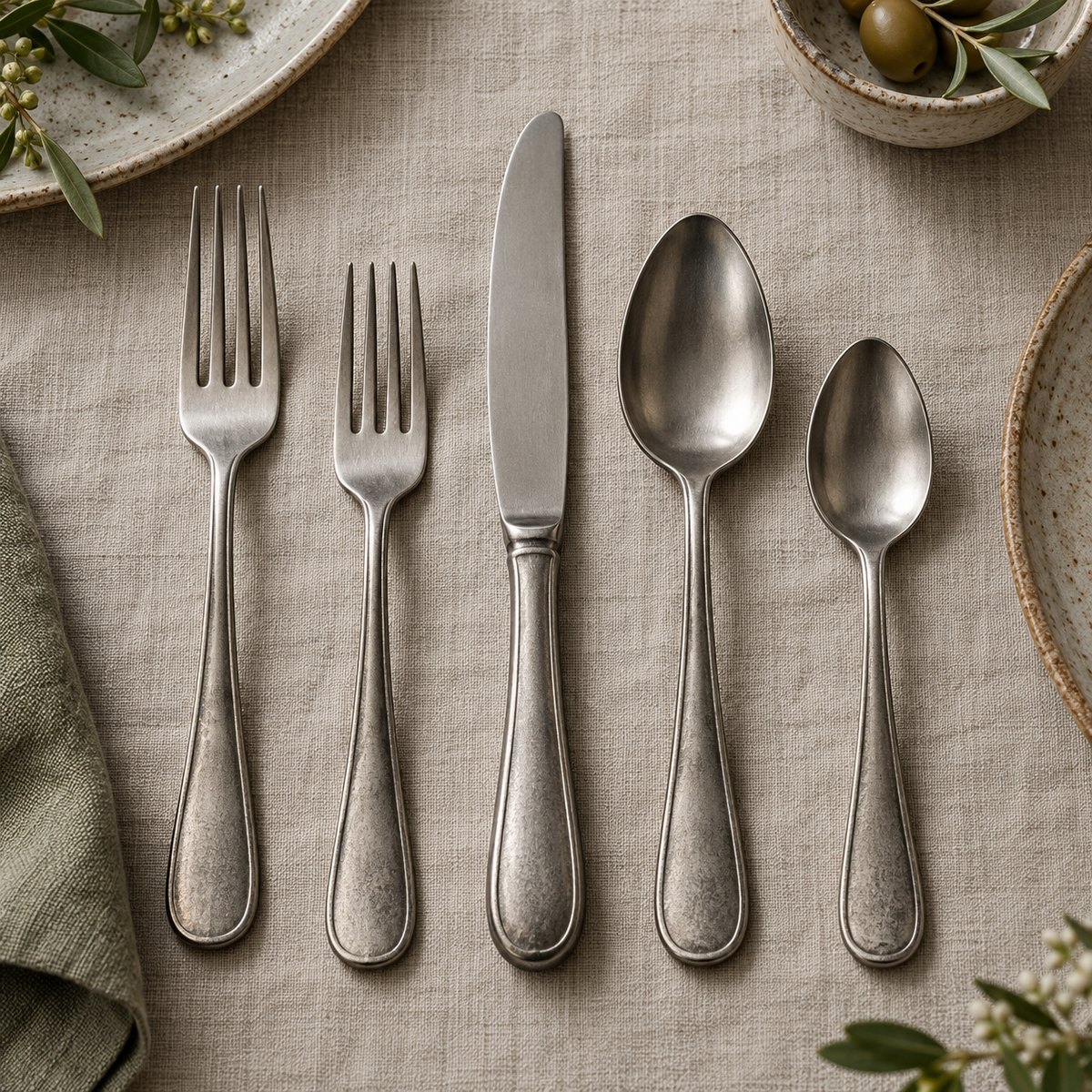
Quick answer: A foodservice cutlery manufacturer should be evaluated against a measurable specification and representative finished samples. Compare piece construction, dimensions, edges, balance, surface consistency, wash behavior, inspection records, packing and reorder controls. Ask the supplier to identify assumptions and approve the final result with signed documents and labeled physical samples.
Translate the restaurant concept into operating requirements
A fine-dining room, café, caterer and quick-service chain do not use cutlery in the same way. Start with covers, menu, table setting, meal periods, wash cycles, storage, roll-up or preset method and replacement pattern. List the pieces actually required. A smaller, carefully chosen range can be easier to wash, count and replenish than a large set with rarely used SKUs.
For restaurant chains, identify which features must be identical across sites and which may vary by market. The manufacturer cannot control consistency if the buyer has not defined a current reference. Create one controlled specification for each SKU and connect it to approved artwork, packaging and a physical master sample.
Require a piece-by-piece product specification
For every fork, spoon and knife, request a drawing or schedule with dimensions, target weight or thickness indicators, material direction, construction, finish, marking and tolerances. A table knife may use a different stainless direction and production method from its matching fork or spoon. The specification should make that difference visible.
Inspect tine symmetry, spoon-rim smoothness, knife-edge finish, handle alignment and transitions. Test normal grip and stacking or sorting behavior. If pieces will pass through dispensers, roll-up stations or magnetic recovery equipment, test the finished products with the actual equipment. A raw material statement cannot predict every operational result.
Define finish quality with limits
Words such as mirror, satin, matte, vintage, gold or black are directions, not complete acceptance criteria. Review samples under consistent lighting and agree what variation is acceptable across pieces and lots. Note polishing direction, gloss, color range, transition quality and areas where process marks are especially visible. Keep an approved control sample protected from daily use.
For decorative coatings or antique effects, ask the manufacturer to explain the proposed system and recommended care. Test finished production-representative pieces under the intended service routine. Do not promise a universal number of wash cycles unless the method and pass criteria are written and agreed.
Use a controlled commercial wash trial
Document detergent, rinse aid, water condition, temperature, loading, cycle, drying and storage. Run the same routine on all compared samples. Check spotting, staining, trapped moisture, discoloration, coating change and residue. Also review how staff separate stainless pieces from other metals and how long wet cutlery waits before washing or drying.
A wash trial is most useful when it reflects the actual restaurant. If several sites use different chemicals or machines, test the highest-risk condition or approve site-specific care instructions. Retain the record with the purchasing file so future quality discussions use the same evidence.
Ask how production quality is controlled
Request the inspection plan that applies to the proposed order. It should identify checks, timing, sample size or agreed inspection level, responsibility and records. Typical controls include incoming material identity, forming dimensions, edge and tine condition, polishing or coating appearance, logo position, piece count and packing. The exact plan should match the product and risk rather than repeat a generic checklist.
Agree how defects will be photographed, classified and reported. A useful report connects each finding to the SKU, lot, requirement and measured result. If a deviation occurs, require a written disposition before shipment. Keep corrective actions separate from temporary containment.
Verify packing and repeat-order controls
Foodservice cutlery often ships in bulk, but bulk should still protect surfaces and support accurate receiving. Confirm pieces per bag or inner, inners per carton, separators, carton strength, labels, gross weight and mixed-SKU rules. Review a packed sample and ensure the product code on the carton matches the specification and purchase order.
For repeat orders, require a stable SKU reference and a controlled dossier containing drawings, material direction, finish limit, logo file, packing and approved sample status. Ask the manufacturer to report any proposed material, tooling, process or sub-supplier change before production. This reduces silent drift between orders.
| Control point | Evidence to request | Buyer approval |
|---|---|---|
| Specification | Piece drawings and tolerances | Signed SKU schedule |
| Surface | Finish limits and representative samples | Labeled control sample |
| Use | Wash and equipment trial record | Documented pass criteria |
| Production | Order-specific inspection plan and report | Approved release record |
| Reorder | Controlled product and packing dossier | Current revision list |
Send an RFQ that can be checked
State restaurant format, piece list, estimated quantity by SKU, destination, material and finish direction, dimensions, logo, packing, wash conditions, inspection evidence and required timing. Ask suppliers to quote against the same fields and mark every exception. A comparable RFQ improves both commercial evaluation and quality control before the order begins.
Send a foodservice quality brief
Share the restaurant model, required pieces, estimated quantity, destination, wash conditions and approval evidence. Tongxing can review the program against real product references.
Foodservice Cutlery Manufacturer Quality Checklist: buyer questions
What is the first document to request from a cutlery manufacturer?
Request a piece-by-piece specification or drawing that defines dimensions, construction, material direction, finish, marking, packing and tolerances.
Does a material certificate prove finished cutlery quality?
No. Material evidence addresses one input. Finished pieces still require checks for dimensions, edges, balance, surface, wash behavior and packing.
How should restaurant cutlery wash performance be checked?
Use finished samples in a documented trial with the actual or representative chemistry, temperature, cycle, drying and storage routine.
What helps keep repeat orders consistent?
Use stable SKU references, current drawings, finish limits, approved artwork, packing files and a labeled master sample, with change notification before production.
Continue the sourcing research
Specification boundary: Final material, dimensions, finish, performance, packaging, compliance and quantity terms must be confirmed in the signed project specification and approved physical sample.