
Lock the piece schedule
Define whether each setting uses a knife, dinner fork, dinner spoon and teaspoon or another approved mix.
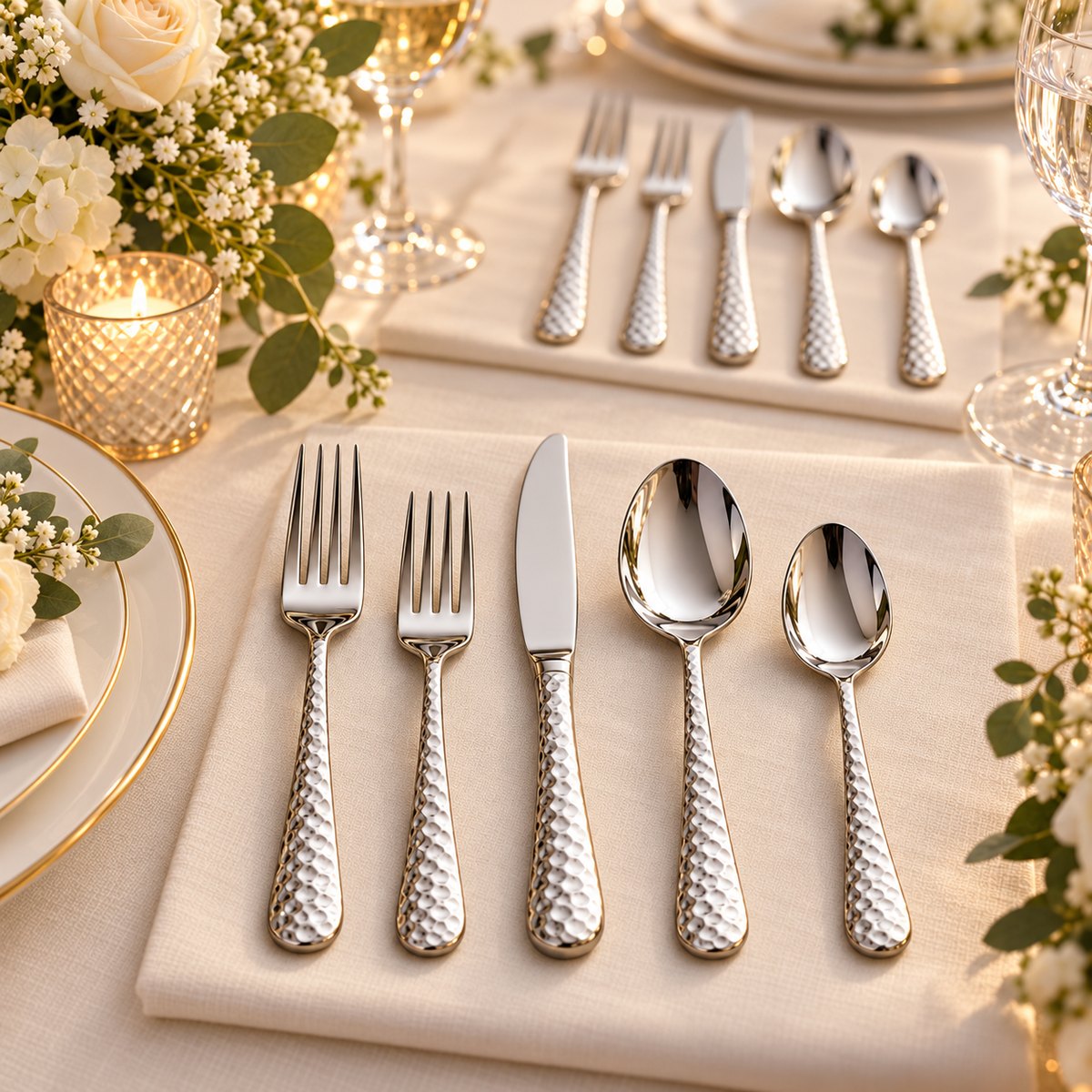
This 16-piece hammered flatware program is structured for four coordinated four-piece settings. It gives distributors and private-label buyers a focused way to approve texture repeatability, matching geometry and protective packing before bulk production.
Procurement program, not a fixed-stock claim. Final material, piece count, dimensions, finish, MOQ, timing, compliance and packaging are confirmed in project documents and samples.
Lock the four-piece composition first, then approve hammer depth and pattern limits on every handle. A beautiful hero sample is not enough unless the same texture standard can be inspected across the full set.
Define whether each setting uses a knife, dinner fork, dinner spoon and teaspoon or another approved mix.
Approve hammer depth, border transitions, back-side appearance and polishing consistency.
Test separators, sleeves and retail or gift-box protection so textured handles do not mark adjacent pieces.
State each required piece, number of place settings, service environment and replacement expectation. Do not rely on a generic set count alone.
Approve color, gloss, texture, edge quality and acceptable variation on signed physical samples viewed under agreed lighting.
Specify logo location, marking method, inner protection, carton format, barcode or label fields and destination-market documents.
Related sourcing program · Sample approval checklist · Flatware RFQ template
Send the product code, required pieces, estimated quantity, destination and your finish, logo or packaging direction. Pricing, MOQ and timing follow specification review.