
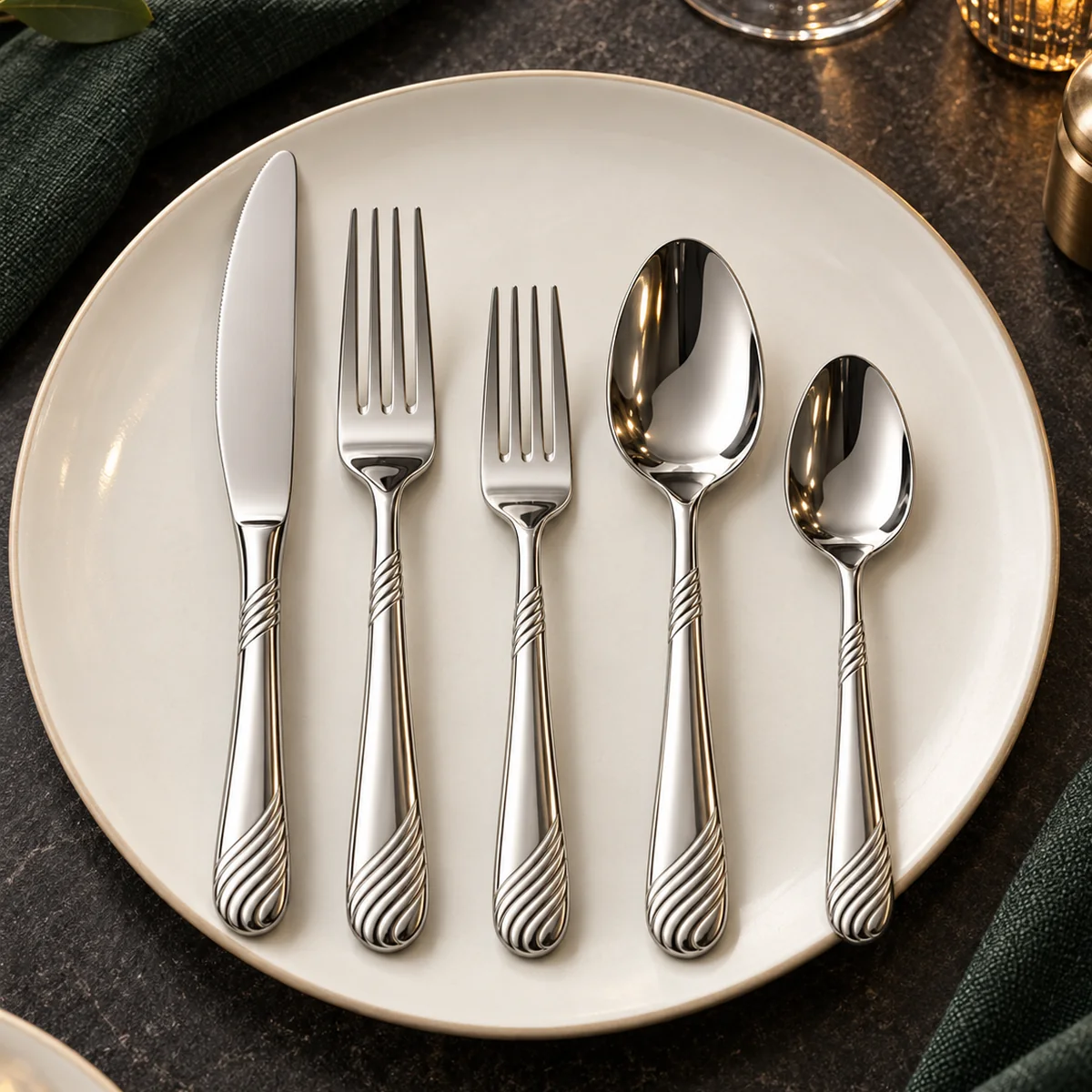
Quick answer: 18/0 is a commercial stainless-steel label used for cutlery. The first number refers to a nominal chromium direction and the second indicates little or no nickel. It is commonly associated with ferritic 430-type stainless and magnetic response, but the label alone does not prove exact composition, corrosion performance, thickness or finish quality. Confirm the material by piece, evidence required and an approved physical sample.
What the 18 and the 0 are intended to communicate
On forks and spoons, 18/0 is shorthand for a chromium stainless direction with little or no nickel. The British Stainless Steel Association explains that the figures relate to chromium and nickel content and associates 18/0 cutlery with ferritic 430-type stainless. That is a useful starting point, not a complete purchase specification. Read the BSSA cutlery-grade explanation beside the supplier declaration and your destination-market requirements.
The wording should be checked piece by piece. A table knife can use a different hardenable stainless direction from its matching spoon and fork because a blade has different stiffness and edge requirements. A quotation that applies one 18/0 label to every component without describing construction is incomplete.
Why buyers connect 18/0 with magnetic flatware
Ferritic stainless is normally attracted by a magnet, so 18/0 is often considered by restaurants using magnetic separators or trash-can recovery systems. That can reduce accidental disposal when the finished pieces and the equipment work together. The buyer should test each production-representative fork, spoon and knife with the intended recovery unit. Raw sheet or an isolated sample does not prove the complete set will behave as expected.
Magnetic response is one operating characteristic. It does not define balance, bending resistance, edge finish, surface quality or wash durability. Build the material decision into a complete service program rather than treating magnetism as the only acceptance test.
What 18/0 does not tell you
| Missing detail | What to specify | How to approve it |
|---|---|---|
| Exact material | Proposed grade and material direction by piece | Supplier declaration or agreed evidence |
| Product mass | Length, thickness or target weight range | Drawing, measured sample and tolerance |
| Surface | Mirror, satin, stonewash or coating system | Signed physical finish sample |
| Wash behavior | Actual chemistry, temperature, rinse and drying conditions | Controlled trial on finished pieces |
| Magnetic recovery | Required response with named equipment | Test every piece in the proposed set |
Corrosion resistance needs a realistic test
18/0 is stainless, but stainless does not mean stain-proof. Salt, chloride products, long wet contact, incomplete rinsing, iron contamination, rough finishing and unsuitable storage can contribute to marks or local attack. Compare samples under the intended dishroom routine and document the chemistry and exposure. Do not approve or reject a program from the grade label alone.
When appearance retention is critical, compare the 18/0 proposal with a chromium-nickel direction under identical conditions. Keep dimensions, finish and handling the same so the result answers the material question instead of mixing several variables.
When 18/0 can be a practical choice
- A restaurant wants magnetic recovery and has compatible equipment.
- A high-volume operation needs a controlled value position and reliable replacements.
- The buyer has defined washing, drying and storage procedures.
- Finished samples meet the required dimensions, balance, edges and appearance.
- The supplier can document the agreed specification and reproduce it for later orders.
For a real product direction, review the TX-N053 magnetic restaurant flatware program. Continue with the 18/0 rust-risk guide and magnetic recovery planning.
Write an RFQ that suppliers can answer consistently
State the application, estimated pieces by SKU, destination, 18/0 direction, dimensions, finish, magnetic-recovery requirement, logo, packaging and evidence required. Ask the supplier to mark every deviation. Approve the final product through signed specifications and physical samples before bulk production.
Turn this decision into a quote-ready brief
Send the application, piece list, material direction, quantity, destination and approval evidence. Tongxing will review the project against samples and specifications.
What Does 18/0 Stainless Steel Mean in Flatware?: buyer questions
Does 18/0 mean zero chromium?
No. The shorthand uses the first number for a nominal chromium direction and the second for little or no nickel. Confirm the proposed grade and evidence with the supplier.
Is 18/0 flatware magnetic?
It is commonly magnetic, but buyers should test every finished piece with the intended recovery equipment before approval.
Is 18/0 the same material for knives, forks and spoons?
Do not assume so. Knife blades can use a different hardenable stainless construction, so require the material and construction by piece.
What belongs in an 18/0 flatware RFQ?
Include pieces, dimensions, weight or thickness, finish, wash conditions, magnetic requirement, evidence, packaging, quantity, destination and sample approval.
Continue the sourcing research
- 18/10 vs 18/0 stainless steel flatware
- 18/8 vs 18/10 vs 18/0 comparison
- Flatware RFQ template for import buyers
Specification boundary: Final material, dimensions, finish, performance, packaging, compliance and quantity terms must be confirmed in the signed project specification and approved physical sample.