
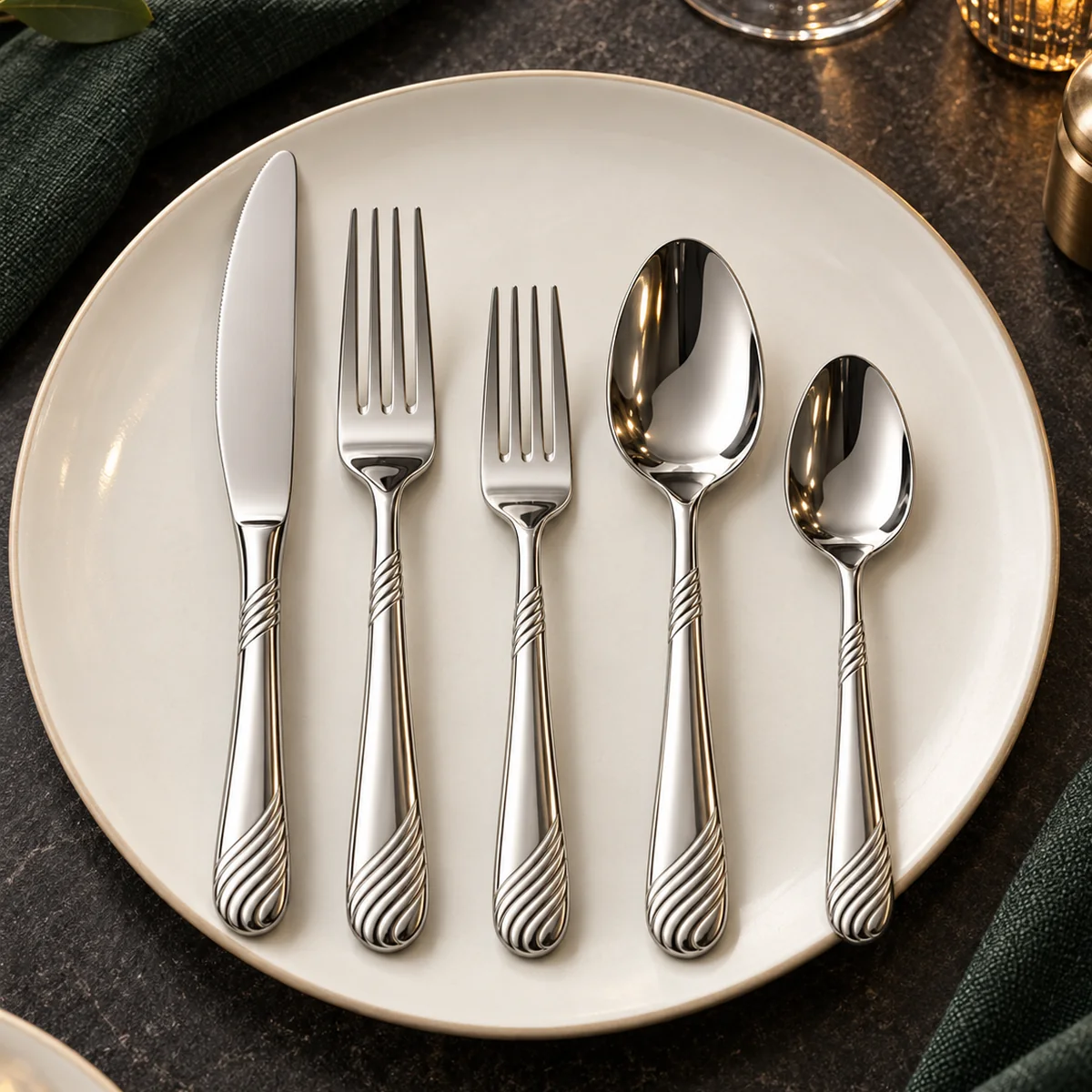
Quick answer: 18/0 stainless steel is corrosion resistant, but it is not immune to rust-colored staining or localized corrosion. Chlorides, prolonged moisture, harsh chemistry, metal contamination, poor rinsing, damaged surfaces and storage conditions can all contribute. Buyers should test finished pieces in the intended wash environment and investigate the process before blaming one cause.
Stainless does not mean stain-proof
Stainless steel protects itself through a thin passive surface layer, but commercial use can challenge that layer. An 18/0 program can perform well when the alloy, manufacturing process, cleaning and storage are controlled. It can also show rust-colored marks or localized attack when exposed to salt, concentrated chemicals, wet storage or iron contamination.
The material label does not identify the cause of every mark. A brown spot may be transferred iron, dried food soil, mineral deposit or corrosion at the surface. Before rejecting a shipment, document where the mark appears, whether it can be cleaned, which pieces are affected and what happened before the issue was discovered.
Common conditions that increase risk
| Condition | What to investigate | Buyer control |
|---|---|---|
| Chloride exposure | Salt, brine, bleach-containing products or concentrated chemical contact | Remove residues quickly and follow the approved chemical program |
| Long wet contact | Soaking, damp trays, nested pieces or incomplete drying | Shorten holding time, separate pieces and dry before storage |
| Mixed-metal contact | Steel wool, carbon-steel equipment or contaminated baskets | Separate tools and inspect dishroom contact points |
| Surface damage | Deep scratches, rough polishing or embedded residue | Inspect finish quality and avoid abrasive handling |
| Water and chemistry | Hardness, dosing, rinse performance, temperature and pH | Record settings and verify them with the chemical provider |
How 18/0 differs in a buying decision
18/0 is often considered where nickel avoidance, price positioning or magnetic response is part of the brief. That does not make it automatically suitable for every operating environment. A coastal venue, brine-heavy menu, poorly controlled dishroom or long damp-storage period deserves a stricter sample trial and care plan.
At the same time, selecting 18/10 does not remove the need for good handling. Any stainless program can show spots or damage when process controls fail. Compare the proposed finished samples under identical conditions and keep the rest of the specification—geometry, thickness, polish and packaging—consistent.
Run a controlled wash and exposure trial
Use several finished pieces from the proposed set, including forks, spoons and knives. Number each sample. Photograph the starting condition under fixed lighting and record weight, dimensions, finish and any existing marks. Run repeat cycles in the intended dishwasher with the normal detergent, rinse aid, temperature, rack load and drying method.
Add realistic service exposure without creating an artificial abuse test. If the menu involves salty or acidic foods, define a repeatable contact time, then rinse and wash according to normal procedure. Inspect after each group of cycles. Record spots, color changes, pitting, roughness and whether marks are removable. A result without recorded conditions is difficult to compare or reproduce.
What to do when rust-colored spots appear
- Quarantine a small affected sample and keep unaffected control pieces.
- Photograph the whole piece and close details with the item code and lot.
- Record the food, soak, wash, rinse, drying and storage sequence.
- Check whether the mark transfers or changes with the approved cleaning method.
- Inspect baskets, racks, sinks and cleaning tools for carbon-steel contamination.
- Compare affected and control pieces with the supplier using the agreed material and finish records.
Avoid polishing away all evidence before the root-cause review. If the issue is widespread, agree on sampling and investigation steps rather than drawing a conclusion from one photographed piece. The rust spot diagnosis guide gives a fuller containment workflow.
RFQ and inspection controls for 18/0 programs
State the intended service environment, magnetic requirement, wash chemistry and destination. Require material identification by piece because the matching knife may use a different construction. Define polish, edge quality, acceptable surface defects and any project-specific corrosion test. Tie all results to an approved physical sample and production lot.
During incoming inspection, look for surface contamination, residue, scratches, rough edges and trapped moisture in packaging. Sample pieces across cartons rather than from one box. Retain controls for later comparison. If magnetic recovery is a goal, test the finished set with the intended equipment before purchase approval.
Use 18/0 where its operating advantages fit
A controlled 18/0 program can support restaurants that need magnetic recovery and a practical replacement path. The TX-N053 18/0 magnetic set direction is one starting point for a project discussion; material chemistry, magnetic response, dimensions and retriever compatibility remain subject to approved samples.
For the wider comparison, read 18/8 vs 18/10 vs 18/0 stainless steel flatware. Buyers troubleshooting dishwasher marks should also review why stainless flatware gets spots after dishwashing and the flatware pitting investigation guide.
Turn the decision into a supplier brief
Send the application, piece list, material direction, quantity, destination and the evidence required for approval. Tongxing can review the project and prepare a sample and quotation discussion.
Does 18/0 Stainless Steel Flatware Rust?: buyer questions
Can 18/0 stainless steel flatware rust?
It can show rust-colored staining or localized corrosion under unfavorable conditions. Chlorides, wet storage, harsh chemistry, contamination, surface damage and poor drying should all be investigated.
Is 18/0 suitable for commercial dishwashers?
It can be, but buyers should test the finished pieces under the actual detergent, rinse, temperature, loading and drying conditions before approval.
How should rust spots on flatware be investigated?
Keep affected and control samples, photograph the marks, record the full handling sequence, inspect dishroom contact points and compare results with the agreed material and finish records.
Why do restaurants choose 18/0 flatware?
Common project reasons include magnetic recovery, nickel-related positioning and commercial cost targets. The finished set still needs sample, wash and equipment testing.
Continue the sourcing research
Compare Tongxing handle and finish directions →
- Diagnose rust spots on stainless flatware
- Why stainless flatware gets dishwasher spots
- Flatware pitting root-cause guide
Specification boundary: Final material, dimensions, finish, performance, packaging, compliance and quantity terms must be confirmed in the signed project specification and approved physical sample.