
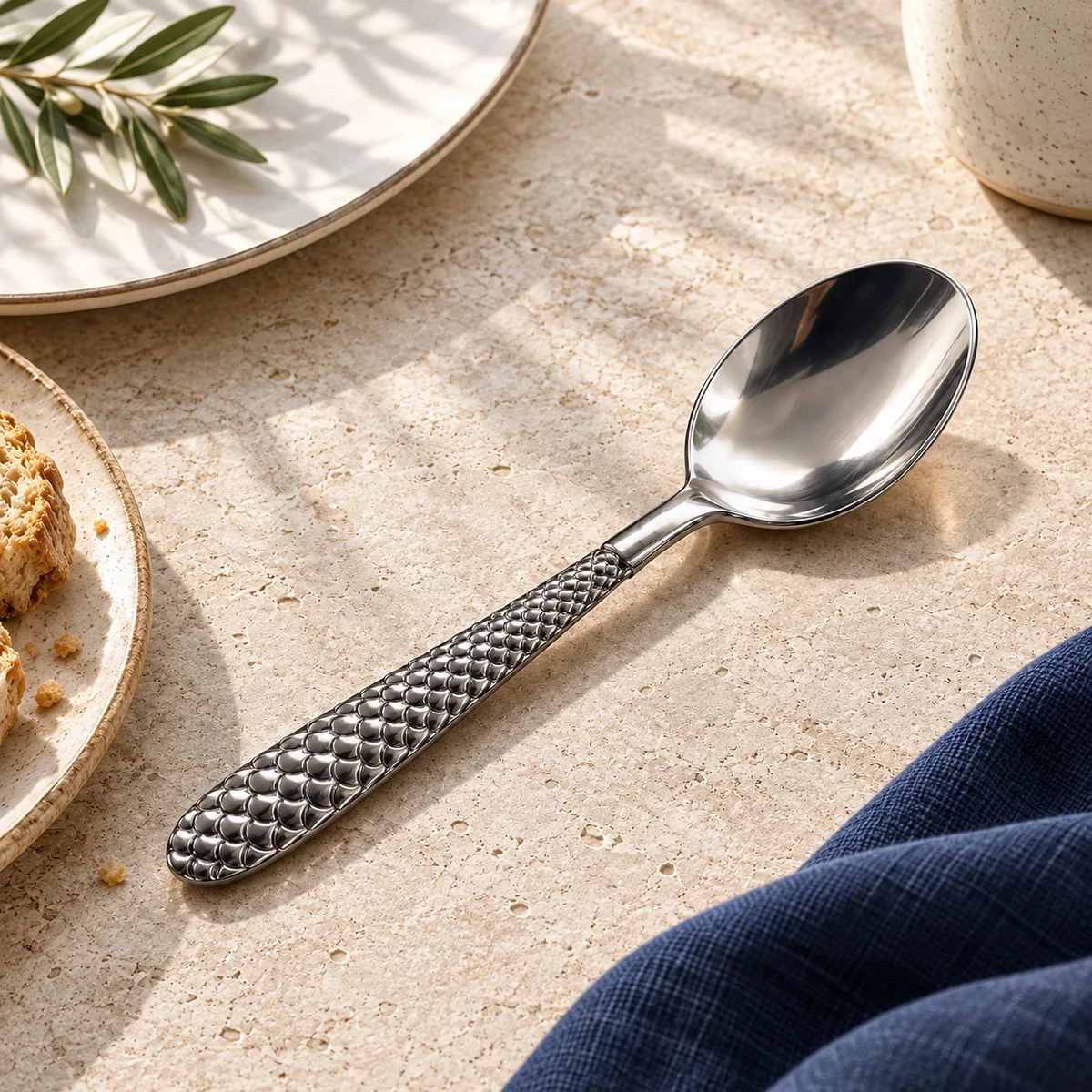
Quick answer: A hospital trayline flatware system should match the menu, tray format, patient or resident needs, wrapping method, wash process and retrieval route. Test the proposed pieces in a mock ready-meal tray handling line, then approve them with a timed tray build, wash trial and retrieval record.
What is a trayline flatware system?
A trayline system is the operating sequence used to assemble meal trays and move them through dispatch, service, collection and washing. Flatware is one part of that sequence, so the buyer must specify how each piece is selected, wrapped or placed, handled on the line, recovered after service and returned to the dishroom.
For a hospital or care facility, choose the piece mix from the approved menu and user requirements rather than copying a restaurant place setting. Record any restrictions on knives, special handles or individually wrapped pieces in the project brief, and confirm the final selection with the operator before production.
Test the pieces in the real tray workflow
Observe one complete service cycle before freezing the specification. A ready-meal tray handling line can reveal clearance, wrapping, sorting and retrieval problems that a sample-room review will miss.
Run the candidate fork, spoon and permitted knife through a mock tray build. Record assembly time, contact with lids or dividers, wrapper performance, wash and drying results, magnetic recovery needs, manual sorting steps and the number of pieces returned. Review the results with hospital foodservice, care-facility or contract-catering procurement teams and keep every conclusion tied to the same product code and sample revision.
Specification worksheet
| Field | What to record | Why it matters |
|---|---|---|
| Use case | hospital foodservice, care facilities and contract-catering procurement teams | Keeps the decision tied to a real buyer or operator. |
| Subject | flatware assembled with patient or resident meal trays | Prevents a broad category name from replacing the specification. |
| Decision | align piece mix, wrapping, handling, washing and retrieval with the trayline | Creates a comparison point for samples and quotes. |
| Evidence | timed mock tray build, wash trial, wrapper check and retrieval record | Gives both parties a traceable approval record. |
What to include in the supplier brief
List the required pieces, material direction, target dimensions or approved reference, finish, logo, packaging method, expected order quantity and destination. Add tray-specific constraints such as compartment clearance, individual wrapping, magnetic recovery, sorting method and replacement-piece requirements.
For every test, define the sample identity, quantity, method and pass condition. Use a timed mock tray build, wash trial, wrapper check and retrieval record. If two reviewers reach different conclusions, refine the method before approving production.
Common trayline sourcing mistake
Do not copy a restaurant place setting into a healthcare tray system without checking the operator’s menu, user requirements and workflow. Stop and clarify the brief if piece restrictions, wrapping, wash conditions or retrieval responsibility remain undefined. Record the accepted result against the approved sample so future orders use the same reference.
Questions for the flatware supplier
Send the required pieces, quantity, destination, trayline workflow, wrapping direction and target timing. Ask the supplier to identify the proposed product codes, material, dimensions, finish, pack method, replacement route and any assumption affecting price or lead time. Request samples for the operator’s tray build and wash trial before approving bulk production.
Turn this guide into a supplier brief
Share the use case and evidence required for approval. Tongxing can prepare a project-specific sample and quotation discussion.
Buyer questions about pieces assembled quickly with meal trays under hygiene and portion routines
What is the first decision for pieces assembled quickly with meal trays under hygiene and portion routines?
Start with the operating use, then align piece mix, handling, patient needs, wrapping and retrieval with the trayline. Record the decision in the RFQ and link it to the exact sample or drawing revision.
What evidence should a buyer request for pieces assembled quickly with meal trays under hygiene and portion routines?
Use mock tray build, line timing, wash test and retrieval record. Evidence should identify the product code, revision, date and affected batch or sample.
What common mistake should buyers avoid?
Avoid copying a restaurant place setting into a tray system with different constraints. Keep observations separate from assumptions and confirm the final result on an approved physical sample.
Continue the sourcing research
- Continue with Hotel Flatware Sourcing →
- Continue with Restaurant Flatware Buying Guide →
- Compare 18/10 and 18/0 stainless flatware →
Specification boundary: Final material, dimensions, finish, performance, packaging, compliance and quantity terms must be confirmed in the signed project specification and approved physical sample.