
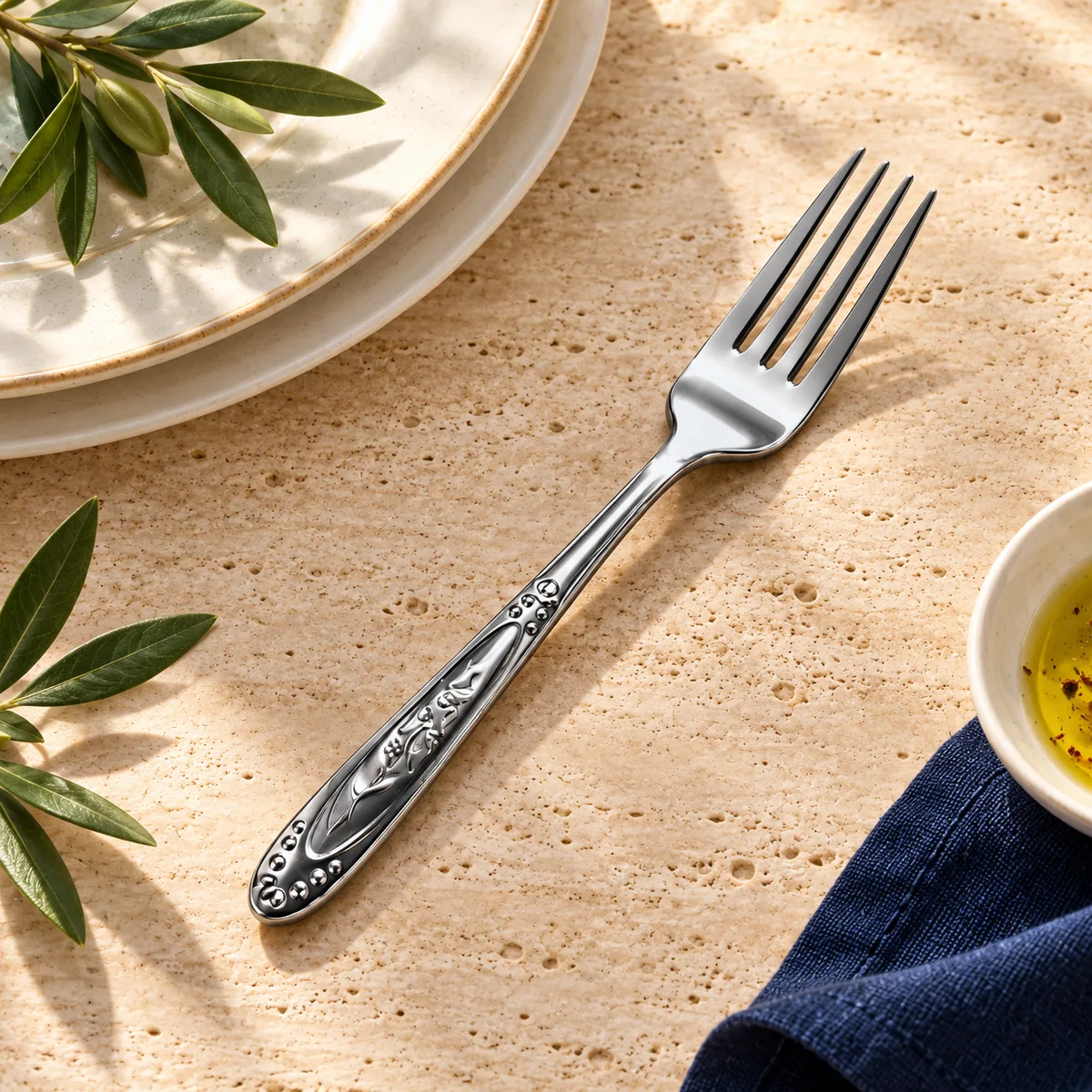
Golden sample definition: A golden sample is a physical product approved by the buyer and supplier as the reference for production and inspection. It shows the accepted appearance and feel of one specific revision. It does not replace the signed drawing, material requirement, measurable tolerances, packaging specification or purchase order.
Prepared by the Tongxing Cutlery OEM/ODM specification team. This guide is for hotel, restaurant, distributor and private-label buyers who need a repeatable approval trail for commercial flatware.
What does “golden sample” mean?
The term describes the approved master reference against which later samples and production are compared. It may also be called an approved sample, master sample, control sample or reference sample. The name matters less than the control method: the item must be identifiable, connected to a current specification and protected from unrecorded change.
For flatware, a golden sample is especially useful for characteristics that are difficult to communicate with numbers alone. These include mirror-polish character, satin direction, edge feel, handle contour, visual balance, embossing definition, logo position and the way pieces sit together in a gift box. A written specification remains necessary for dimensions, weight targets, material direction, tolerances, pack counts and test requirements.
Golden sample versus specification
| Control | Best reference | Buyer action |
|---|---|---|
| Overall length, width, thickness and weight | Signed drawing and tolerance table | Measure the approval sample and record actual values |
| Mirror, satin, stonewashed or colored appearance | Physical sample plus finish description | Review under agreed lighting and keep close photographs |
| Edge comfort, balance and hand feel | Physical sample and use test | Handle every piece and record the acceptance decision |
| Logo artwork and position | Approved artwork, drawing and physical sample | Confirm size, orientation, process and contrast |
| Gift box, tray and protection | Packaging specification and packed sample | Approve placement, restraints, labels and transport protection |
| Material and compliance evidence | Purchase specification and required records | Do not infer material grade or compliance from appearance |
How a pre-production sample becomes the golden sample
- Assign identity. Put the product code, piece name, finish, project and sample number on the submission before review.
- Confirm the document revision. The sample must point to the exact drawing, specification, artwork and packaging revision used to make it.
- Measure the item. Record actual dimensions, weight and any project-specific checkpoints. Do not approve only from a photograph.
- Review appearance and use. Check finish, edge comfort, balance, logo, pattern definition and the intended table or packaging context.
- List accepted differences. If the sample departs from the drawing, either correct it or approve a written deviation. Unrecorded exceptions become repeat-order disputes.
- Approve with names and date. Record who approved the sample for the buyer and supplier, the decision date and any conditions.
- Seal the reference. Label the approved physical item and store it so it cannot be confused with sales samples, rejected versions or later experiments.
Golden sample approval checklist for flatware
- Product code, piece type and coordinated set are correct.
- Material direction and any required supporting records match the project brief.
- Length, head geometry, thickness, weight and tolerance results are recorded.
- Fork tines, spoon rim and knife edges meet the agreed comfort and function criteria.
- Mirror or satin finish is reviewed on both faces, at transitions and around decoration.
- Color-coated pieces show the approved tone and coverage direction; measurable process requirements remain in writing.
- Embossed, engraved or stamped decoration has the accepted depth and definition.
- Logo artwork, size, position, orientation and process are approved.
- Individual protection, tray fit, labels, barcode and carton details match the packaging file.
- Approval status, date, revision and storage location are recorded.
Label and store the reference correctly
A loose sample in a drawer is not a controlled golden sample. Attach a durable tag or sealed record with the product code, sample number, revision, approval date and status. If writing directly on the utensil would damage the finish, place it in a clearly identified sleeve or sample board.
Agree whether buyer and supplier keep matching references. When both parties retain a sample, photograph them together at approval or record their identifiers in the same approval form. Store finish samples away from abrasion, chemicals and uncontrolled polishing. Mark obsolete samples clearly rather than letting several “approved” versions remain in circulation.
How inspectors should use a golden sample
The sample helps an inspector answer a comparison question: does production reasonably match the approved reference for the characteristics assigned to it? It should be used with the current inspection specification, sampling plan and measurable limits. The sample alone cannot define every acceptable variation across a production lot.
When a difference appears, identify the characteristic and scale: for example, “satin direction differs on 7 of 80 checked table forks” or “logo sits 2 mm closer to the handle end than the approved drawing.” Photograph production beside the reference under the same lighting, record the affected quantity and follow the agreed disposition process.
When must a new golden sample be approved?
Review the reference when a change can alter the buyer-visible or functional result. Typical triggers include a revised handle profile, new utensil head, material direction, thickness, polishing route, PVD color, logo process, packaging structure or a new source for a critical component. A repeat order does not automatically need a new golden sample if the approved revision and process remain valid, but the order documents should identify the existing reference.
Never replace the old master silently. Issue a new revision, explain what changed and record which purchase orders use it. This creates a useful history when a buyer compares current production with an earlier shipment.
Common approval mistakes
- Using a showroom sample: an attractive sales sample may not match the quoted material, construction or packaging.
- Approving from photos only: images cannot confirm weight, balance, edge feel or subtle surface texture.
- Missing revision control: the factory and buyer may compare production with different drawings.
- Letting the sample override written tolerances: one physical item cannot define the allowed range for every measurable characteristic.
- Failing to control packaging: an approved utensil can still arrive scratched if the packed sample was never reviewed.
- Keeping only one untracked reference: if it is damaged or lost, the project loses its practical comparison point.
RFQ fields that make sample approval faster
Send the intended market and use, piece list, estimated quantity, destination, material direction, target dimensions or weight class, finish, logo method and packaging format. Identify which details must match a supplied reference and which can be developed by the supplier. State whether you need a visual sample, functional prototype, packed sample or final pre-production approval.
Ask the quotation to separate confirmed requirements from assumptions. That lets both parties resolve gaps before sampling and helps competing suppliers price the same scope.
Prepare a controlled flatware sample
Send Tongxing your piece list, reference photos or drawing, target finish, logo, packaging, quantity and destination. We can discuss which documents and physical samples should be approved before production.
Frequently asked questions
What is the definition of a golden sample?
A golden sample is a physical product approved by the buyer and supplier as the reference for production and inspection. It represents the accepted appearance and feel of a specific revision, while measurable limits remain in the signed drawing and specification.
Is a golden sample the same as a pre-production sample?
A pre-production sample becomes a golden sample only after it is checked, identified and formally approved. An unapproved sample, sales sample or photo should not control bulk production.
Can photos replace a physical golden sample?
Photos help document color, finish and details, but they do not reliably show weight, balance, edge feel, surface texture or small geometry differences. Use photos as supporting evidence and keep a coded physical reference when those characteristics matter.
Who should keep the approved golden sample?
Buyer and supplier should agree where controlled counterparts are stored. Each reference should carry the same product code, revision and approval record so both parties can identify the correct sample during production, inspection and reorders.
What happens when production differs from the golden sample?
Record the difference against the approved sample and written tolerance, identify affected quantity and decide whether to rework, accept by written deviation or reject. Do not silently replace the approved reference.
Continue the quality-control workflow
- Flatware sample approval checklist
- Pre-production quality checklist for flatware
- Flatware dimensions and tolerance planning
- Better defect photos for flatware quality reports
- Packaging sample approval for flatware
Specification boundary: Final material, dimensions, finish, performance, packaging, compliance and quantity terms must be confirmed in the signed project specification and approved physical sample.