
Quick answer: Compare suppliers only after they answer the same product brief. Score specification clarity, sample conformity, process control, inspection evidence, packaging, communication and repeat-order support alongside landed cost.
A supplier comparison fails when each quotation describes a different product. One offer may exclude packaging, use a different material direction or quote a lighter construction. The useful comparison begins with a controlled RFQ and ends with evidence linked to the finished sample.
Build one comparison specification
Issue the same piece list, dimensions or reference, material direction, finish, logo, packaging, quantity, destination and required documents to every candidate. Separate fixed requirements from preferences. Require suppliers to mark deviations rather than silently substituting.
Use a line-by-line comparison sheet. If a field is blank, treat it as an open assumption, not an agreement.
Confirm who controls the product
Ask whether the supplier manufactures, coordinates or trades each part of the program, and who owns or controls relevant tooling and drawings. The answer affects change control, sample timing and repeat orders. A capable partner should explain the proposed route without overstating factory scope.
Compare finished samples against data
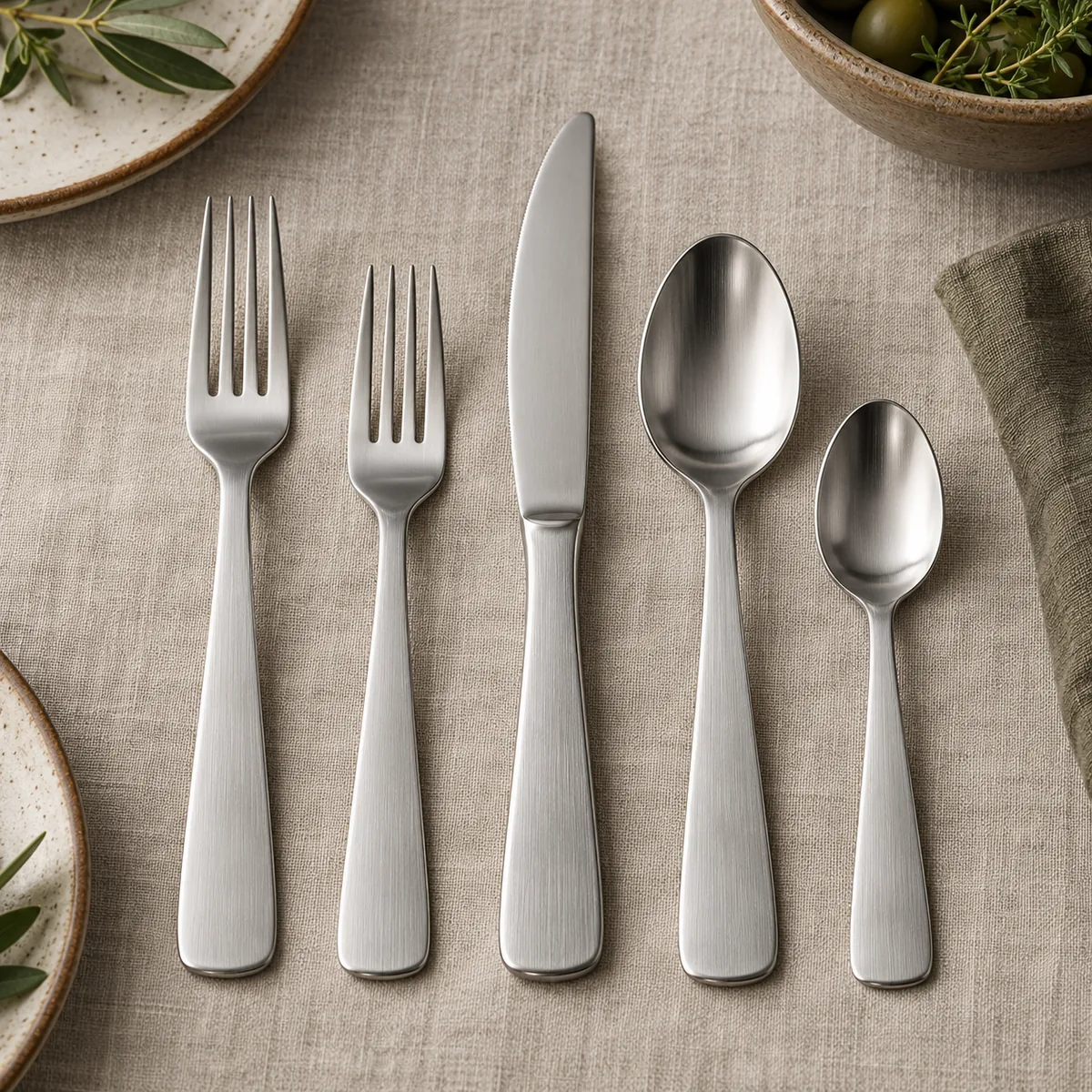
Request representative samples of every key SKU and finish. Record product code, revision, dimensions, weight, material direction, finish and date. Compare the sample with the quotation and specification. Check edges, symmetry, fork tines, bowl shape, knife function, polishing transitions, logo and contact marks.
Review material and process evidence
Material records address alloy input; they do not prove finished-product performance. Ask what incoming, in-process and final checks apply to your order. For colored or textured finishes, review process controls and the approved visual limit. For wash performance, agree on the trial conditions and acceptance method.
Ask how defects are defined and reported
Agree on inspection scope, sampling plan, defect categories and reporting before production. Define critical functional or safety issues separately from major appearance deviations and minor cosmetic variation. Photos should include scale, lighting and product identity so a buyer can make a decision.
Compare packaging and logistics inclusions
Check pieces per inner, protection, retail or bulk packing, carton dimensions, gross weight, labels, pallet assumptions and shipping mark. Confirm the quoted trade term and named place. Two unit prices are not comparable when one includes stronger packaging, inspection or inland movement and the other does not.
Evaluate communication with real tests
Send the same clarification questions and track whether answers are complete, consistent and linked to documents. Fast replies are useful only when they resolve the specification. Ask the supplier to summarize open points, owner and due date after a sample review.
Check repeat-order controls
Ask how approved drawings, artwork, finish limits, packing files and master samples are stored and revised. Require notification before changes to material, tooling, process or sub-supplier. Stable identifiers and change control protect the second order as much as the first.
Use a weighted supplier scorecard
Weight the factors that matter to the project: product fit, evidence, quality plan, service, timing, packing, landed cost and repeatability. Keep a written reason for the final choice. A scorecard does not replace judgment, but it exposes where a cheap quote depends on unanswered assumptions.
Run a focused pilot before a complex rollout
When the program includes a new finish, custom tooling, multiple packs or many locations, consider a controlled pilot quantity or staged approval. Define what the pilot must prove: product conformity, wash behavior, packing protection, receiving accuracy or customer response. Record results by SKU and keep the approved pilot reference with the production file.
A pilot should have a decision date and acceptance criteria. Without them it becomes extra inventory rather than useful evidence.
Verify capacity against the required calendar
Ask for the production route and key lead-time assumptions for the quoted quantity. Check whether tooling, finish processing, packaging components and inspection can fit the launch date. Capacity statements are more useful when tied to the specific product, quantity and approval status. Build schedule allowance for sample revisions and shipping rather than treating production lead time as the complete calendar.
Turn this guide into a quote-ready brief
Send destination, quantity by SKU, product reference, material and finish, branding, packaging and target timing. Tongxing can review the brief against real catalog references.
Compare Stainless Steel Flatware Suppliers: buyer questions
What is the first step when comparing flatware suppliers?
Send every supplier the same controlled RFQ and require a response to each specification, quantity, packaging and evidence field.
Does a material certificate prove flatware quality?
No. It supports one input. Finished pieces still need dimensional, functional, surface, wash and packaging review.
How many supplier samples should a buyer check?
Check every key SKU and every proposed finish, with more than one piece where variation or assembly matters.
What should a flatware supplier scorecard include?
Include specification conformity, sample quality, process and inspection evidence, communication, packaging, timing, landed cost and repeat-order control.
Continue the sourcing research
Specification boundary: Final material, dimensions, finish, performance, packaging, compliance, MOQ and timing must be confirmed in the signed project specification and approved physical sample.