
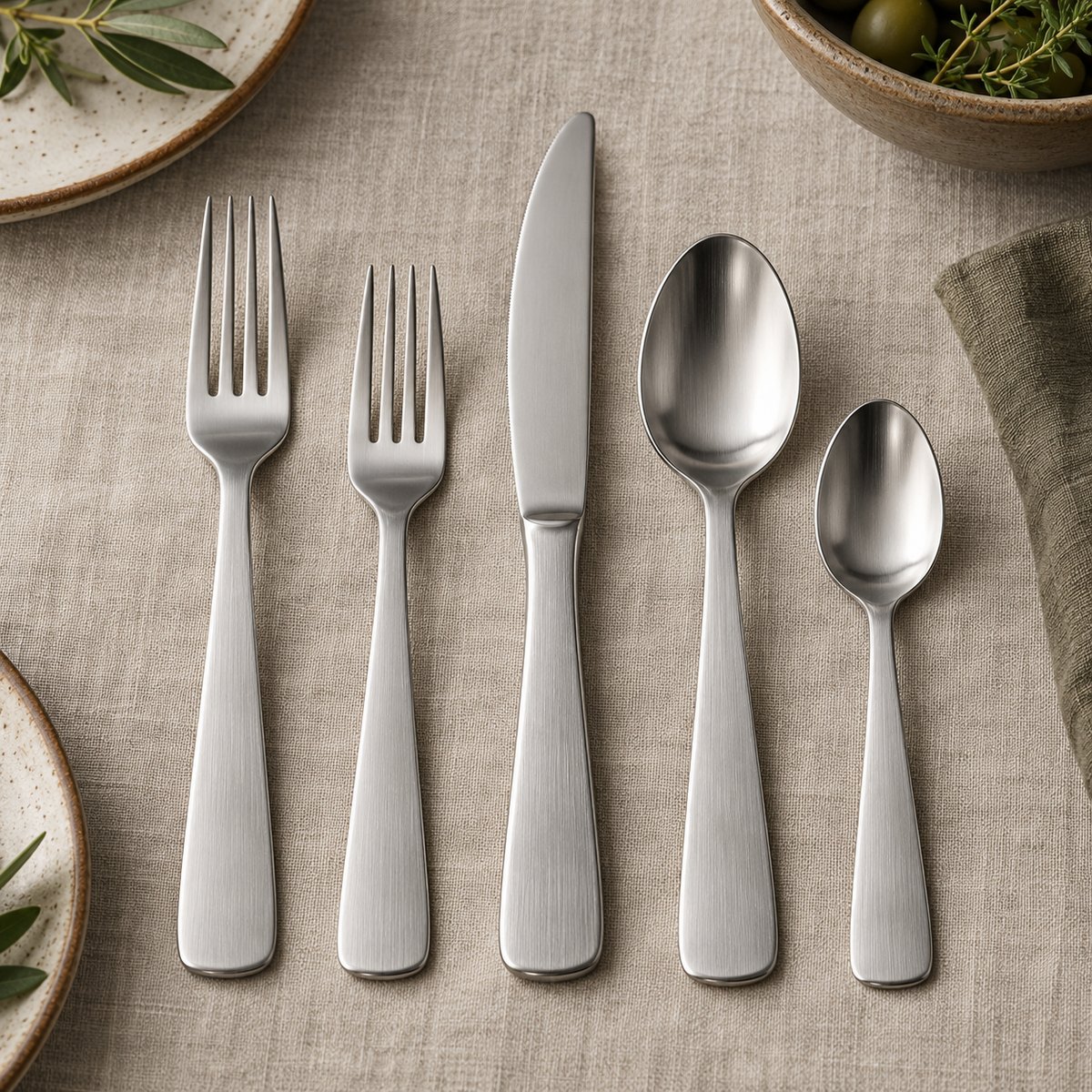
Quick answer: Evaluate a hotel flatware supplier sample as an operating program, not as a single attractive spoon. Review every required piece for dimensions, balance, edge comfort, surface consistency, wash conditions, table presentation, replacement continuity and packing. Record the accepted result in a signed specification and retain a labeled physical sample before bulk production.
Start with the hotel service map
A hotel can serve breakfast, all-day dining, banquets, rooms, lounges and specialty restaurants from the same property. Each area creates a different piece mix and different loss or replacement pattern. Before requesting a sample, list the service areas, seats or covers, menu style and the pieces used at each touchpoint. This prevents a supplier from presenting a five-piece place setting that looks complete but leaves the buyer without dessert, tea, buffet or serving pieces.
Decide whether one coordinated pattern should cover the whole property or whether premium and high-volume areas need separate directions. A single pattern can simplify replacement stock. Two carefully controlled programs can better match service levels. The decision belongs in the purchasing brief so supplier samples answer the real operating question.
Check every piece, not only the hero piece
Lay the proposed table fork, spoon, knife, teaspoon and dessert pieces together. Compare overall proportion, handle width, transition points and visual alignment. Measure length and the agreed weight or thickness indicators. Check fork tines, spoon rims and knife edges for comfort and consistent finishing. Hold each piece in normal service positions; balance and grip can reveal problems that a photograph cannot.
A coordinated set may use different stainless constructions by piece, particularly for a table knife. Ask the supplier to state the proposed material and construction for every SKU. Keep claims such as 18/10, 18/0, forged or hollow handle tied to the exact approved item rather than applying one general label to the whole collection.
Approve the finish under realistic lighting and washing
Mirror and satin surfaces behave differently under dining-room lighting, handling and repeated cleaning. Review the sample in daylight and in the warm or cool artificial light planned for the venue. Look for polishing lines, haze, pits, uneven color, sharp transitions and differences between pieces. If a colored or antique direction is proposed, define an acceptable visual range with reference samples instead of relying on a screen image.
Run a controlled wash trial using the intended detergent, rinse aid, temperature, cycle, drying and storage routine. Record every condition. A casual home-dishwasher trial is not evidence for a commercial dishroom. Compare the result with an unwashed control and note spots, staining, coating change or trapped moisture. The trial helps the buyer judge the complete system; it does not replace destination-market compliance review.
Test replacement logic before opening
Hotels lose teaspoons, forks and other frequently handled pieces at different rates. Ask how single pieces can be reordered, how long the supplier intends to support the pattern, and what identifiers will stay on drawings, cartons and invoices. Agree a practical opening reserve by SKU rather than adding one percentage to the total set count. A replacement plan protects table consistency after opening and makes later inquiries faster.
For multi-property groups, define which dimensions and visual features must remain common across locations. Keep an approved master specification, current artwork, packaging files and a labeled golden sample. Future orders should refer to this dossier and record any approved change.
Review packing as part of the sample
Sample approval should include the proposed unit protection, inner packing, carton quantities, labels and mixed-SKU rules. Polished pieces can scratch when protection and movement are not controlled. The receiving team also needs readable product codes and counts so it can identify shortages quickly. Ask for a packing mock-up or representative packed sample before final approval.
| Review area | Buyer question | Approval evidence |
|---|---|---|
| Piece mix | Does every service area have the required pieces? | Venue-to-SKU matrix |
| Product | Are dimensions, balance, edges and construction acceptable? | Measured, labeled sample |
| Finish | Is the surface consistent in venue light and after washing? | Finish limit and wash record |
| Replacement | Can individual SKUs be reordered consistently? | Open-stock list and reference codes |
| Packing | Will pieces arrive protected and countable? | Packing mock-up and carton marks |
Write a quote-ready hotel brief
Send the supplier the venue type, service areas, required pieces, estimated quantity by SKU, destination, material direction, finish, logo, packing, evidence requirements and target timing. Invite the supplier to mark assumptions and alternatives. A precise brief makes quotations easier to compare and gives the sample review a clear pass-or-revise decision.
Prepare a hotel sample request
Send the venue type, service areas, required pieces, estimated opening quantity, destination and preferred finish. Tongxing can map the brief to real catalog references and a controlled sample review.
How to Evaluate a Hotel Flatware Supplier Sample: buyer questions
How many hotel flatware pieces should be sampled?
Sample every proposed SKU, not only one spoon or a generic five-piece set. Include service and specialty pieces that affect the program.
Should a hotel approve flatware from photographs?
Photographs help shortlist a direction, but dimensions, balance, edges, finish and wash behavior require a labeled physical sample and signed specification.
What should a hotel wash test record?
Record chemistry, temperature, cycle, rinse, drying, storage and number of repetitions so results can be compared and repeated.
How should replacement stock be planned?
Estimate demand and loss by individual SKU and service area, then confirm open-stock references and reorder controls with the supplier.
Continue the sourcing research
Specification boundary: Final material, dimensions, finish, performance, packaging, compliance and quantity terms must be confirmed in the signed project specification and approved physical sample.