
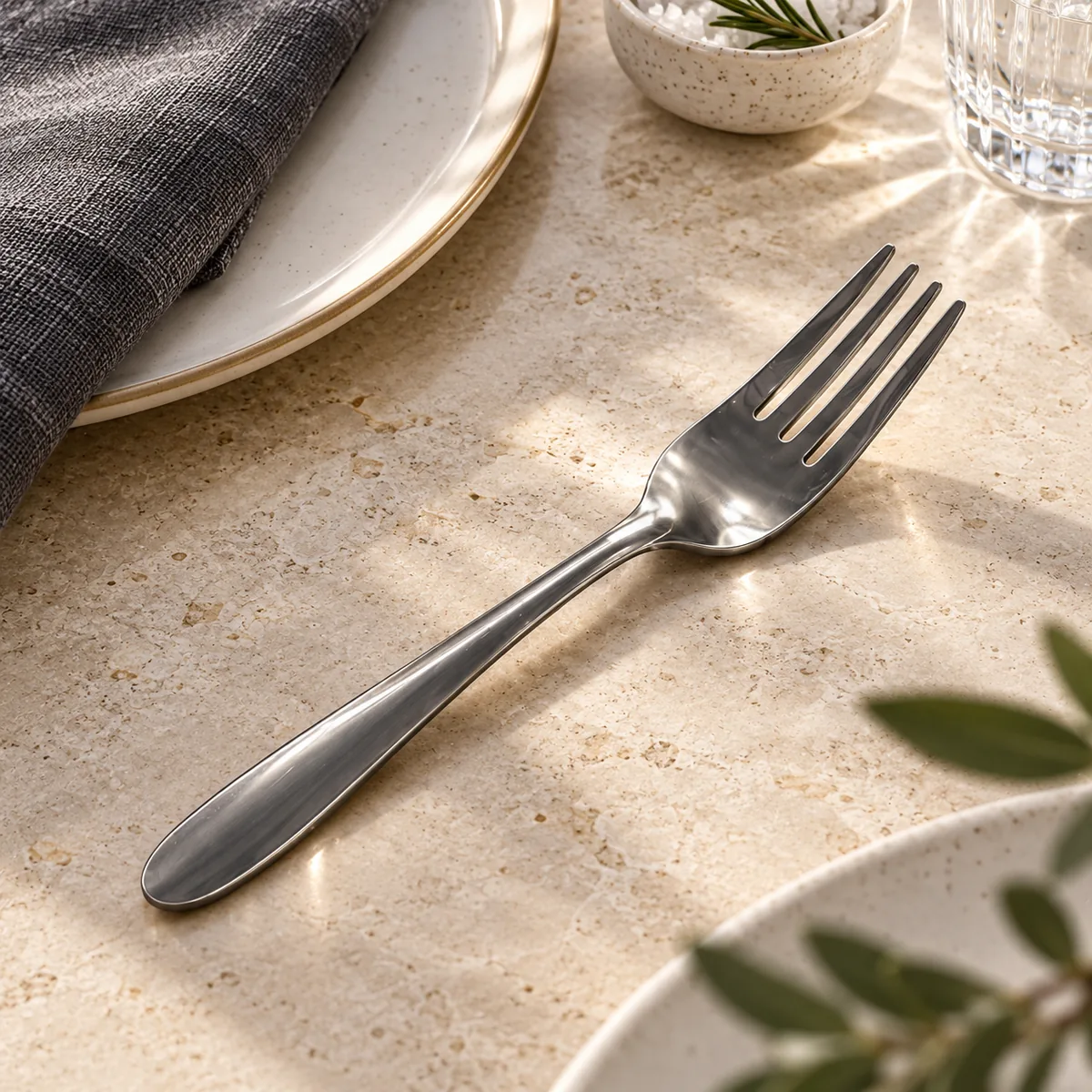
Quick answer: A butter knife is a broad catalog name for a small table knife used with butter and similar foods. A butter spreader usually describes a blunt utensil with a wider spreading surface and little or no cutting edge. The names overlap between markets, so a purchase order should define the profile, dimensions and intended use instead of relying on the name alone.
Decision answer in three lines
- Name: “Butter knife” is a broad catalog term; “butter spreader” usually signals a blunt, wider spreading blade.
- Choose: Use a compact spreader for individual bread service, or define a light working edge when the menu also needs gentle cutting.
- Verify: Approve the drawing, dimensions, food-use test, plate fit and physical sample—not the product name alone.
Prepared by the Tongxing Cutlery OEM/ODM specification team. This guide is based on the questions used to turn a buyer’s service requirement into a sample and controlled product brief.
Butter knife vs butter spreader at a glance
| Comparison | Butter knife | Butter spreader |
|---|---|---|
| Typical role | Small table knife for butter and light food handling; exact edge varies by pattern. | Spreading soft foods such as butter, preserves or soft cheese. |
| Blade profile | May be narrow or moderately broad, sometimes with a light working edge. | Usually short, blunt and broad enough to carry and spread a small portion. |
| Tip | Rounded or softly pointed depending on the flatware pattern. | Normally rounded to support safe, controlled spreading. |
| Table placement | Can be part of a broader place setting; placement depends on service style. | Often selected to fit an individual bread plate or butter dish service. |
| Best approval evidence | Drawing, edge description, food-use trial and approved sample. | Blade dimensions, spread test, bread-plate fit and approved sample. |
Independent references for terminology and table placement
Three independent sources clarify the general English terms and common hospitality placement used in this guide:
- Cambridge Dictionary defines a butter knife as a small knife without a sharp edge, used for cutting and spreading soft foods such as butter.
- The Fitzwilliam Museum terminology record describes butter spreaders as small knives with wide, dull blades used as individual place pieces, and distinguishes them from serving butter knives.
- Hong Kong Education Bureau hospitality training material shows the butter knife on the butter or side plate in a formal table setting, with its cutting edge facing left.
These references explain general usage and placement. They do not define a supplier’s exact dimensions, edge geometry or production grade. Commercial buyers should approve the dimensioned drawing and a physical sample for their intended service.
Which one should a restaurant or hotel choose?
Choose by service task. For an individual bread plate with portioned butter, a compact blunt spreader usually gives guests the clearest function and keeps the utensil proportionate to the plate. For a menu that needs light cutting as well as spreading, ask for a butter-knife profile with a defined working edge.
Buffet and shared-dish service can require a different length or blade area from an individual place setting. If preserves or soft cheese are included, test those foods as well as butter. A catalog photograph cannot show whether the utensil feels balanced, fits the plate or moves chilled food cleanly.
Five specifications that prevent ordering mistakes
- Overall length: record the finished length and tolerance, especially when the piece must fit a bread plate or retail tray.
- Blade width and usable area: identify the widest point and the surface intended to carry food.
- Edge and tip: state whether the edge is fully blunt, lightly functional or decorative, and define the tip profile.
- Handle and balance: confirm the handle pattern, thickness, weight direction and comfort in the intended grip.
- Finish and identity: tie mirror, satin or colored finish, logo position and product code to the approved physical sample.
Buyer evidence matrix
| Decision | Evidence to record | Approval signal |
|---|---|---|
| Individual bread service | Bread-plate diameter, utensil overall length and resting position | The piece fits without crowding adjacent tableware |
| Spreading performance | Food type, service temperature, portion size and blade coverage | A controlled portion spreads without excess force or food loss |
| Edge function | Drawing note plus a simple soft-food cutting trial | The edge performs the stated task without creating a sharp table-knife profile |
| Repeat order control | Product code, drawing revision, dated approval and retained sample | Future supply can be compared with the same controlled reference |
A simple sample test for buyers
Test the utensil with the foods and temperatures used in service. Include room-temperature butter and a chilled sample if both conditions occur. Ask two reviewers to spread a consistent portion on the intended bread or plate, then record coverage, control, comfort and food left on the blade. Check that the piece rests securely on the bread plate without crowding the cup, side plate or neighboring flatware.
After the use test, inspect the edge, polish and transitions under consistent lighting. Run the planned wash and care process, then compare the same sample with its pre-wash record. The approval note should include the product code, drawing or sample revision, date and reviewer.
RFQ wording you can copy
Example: “Quote a blunt butter spreader for individual bread-plate service. State overall length, maximum blade width, product weight, material direction, finish, handle pattern, logo method and packing. Supply a dimensioned drawing and physical sample for spread, placement and wash review. Identify any difference between the quotation sample and mass production.”
Common naming trap
Do not assume every supplier uses “butter knife” and “butter spreader” in the same way. Two catalogs can use different names for similar pieces, or the same name for different profiles. Compare the actual drawing and sample. This also helps purchasing teams maintain compatible replacement pieces after a pattern or supplier change.
Need a butter knife or spreader sample?
Send the target use, destination, quantity, length range, finish and handle reference. Tongxing can turn the brief into a product and sample discussion.
Frequently asked questions
What is the difference between a butter knife and a butter spreader?
A butter knife is a broad market name for a small table knife used with butter and similar foods. A butter spreader usually has a blunt, wider spreading surface and little or no cutting edge. Catalog terminology varies, so specify the profile and use.
Which piece is better for individual bread service?
A compact, blunt spreader that fits the bread plate is usually the clearest choice. Confirm width, length, balance and plate fit on a physical sample.
Can the two names be used interchangeably?
They are sometimes used interchangeably, but they do not guarantee the same blade. Use a drawing, dimensions, product code and approved sample in the specification.
What should a commercial buyer test?
Test spreading at actual service temperature, comfort and balance, bread-plate placement, edge finish, washing and the match between sample and controlled product code.
What information should be included in a butter spreader RFQ?
State the target use, overall length, maximum blade width, edge function, handle pattern, material direction, finish, quantity, destination, packing and the drawing and physical-sample evidence required for approval.
Continue the sourcing research
- Build the right commercial flatware set composition →
- Compare dinner fork and spoon sizes →
- Compare stainless steel grades for flatware →
Specification boundary: Final material, dimensions, finish, performance, packaging, compliance and quantity terms must be confirmed in the signed project specification and approved physical sample.